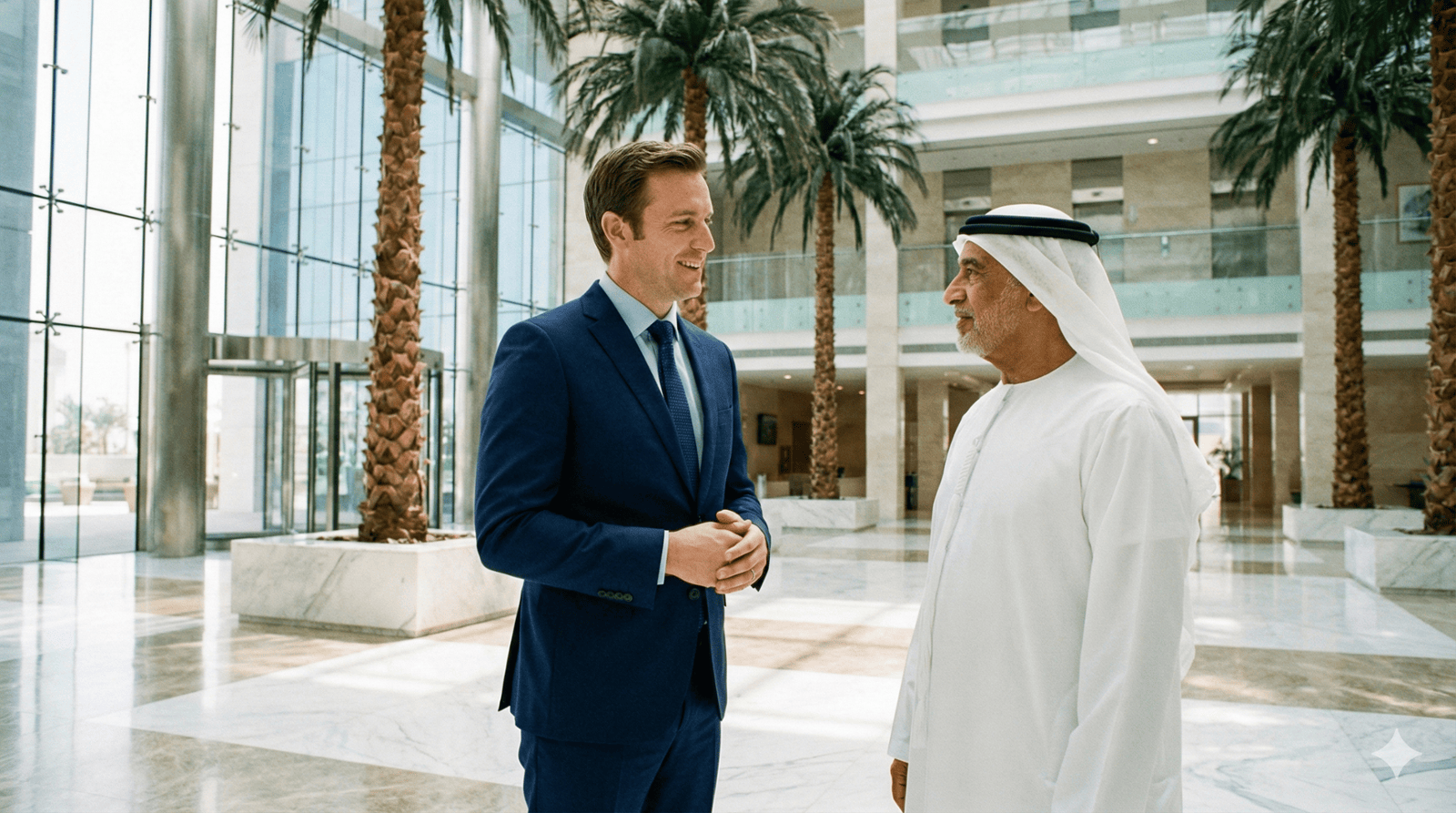
Why cultural intelligence is the ultimate risk mitigation strategy for elite hospitals and private Family Offices hiring CCT-qualified clinicians
In the rarefied air of Tier 1 medical recruitment for the Gulf, clinical excellence is assumed. When a JCI-accredited hospital in Abu Dhabi or a Royal Household in Riyadh reviews a candidate dossier, the presence of a UK CCT, US Board Certification, or European equivalent is merely the price of admission. These credentials guarantee technical safety and adherence to Evidence-Based Medicine (EBM). However, technical competence alone does not guarantee success in the region's most sensitive roles.
The decisive factor—the differentiator between a disruptive hire and a seamless integration—is high-level Cultural Intelligence (CQ). For premium employers, assessing a Western-trained candidate’s ability to navigate the nuances of Gulf society is the ultimate form of Proactive Risk Mitigation.
The Collision of Clinical Rigor and Cultural Hierarchy
Western medical training emphasizes autonomy, direct communication, and egalitarian teamwork. While clinically robust, this approach can occasionally create friction within the hierarchical structures often found in Gulf institutions or private family settings.
A Western-trained Medical Director who attempts to implement protocols without first building consensus with long-standing local stakeholders may find their initiatives stalled. Similarly, a private physician in a UHNW Family Office who fails to understand the unwritten protocols of a Majlis, or the delicate dynamics of family hierarchy, poses a significant reputational risk. The elite candidate understands that while the laws of physiology are universal, the delivery of care is deeply cultural.
Cultural Competency as a Clinical Asset
The most successful Western-trained clinicians in the region are those who view cultural adaptation not as a compromise of their standards, but as an extension of their clinical toolkit. They understand that patient compliance—particularly in managing chronic diseases like diabetes prevalent in the region—is rooted in trust. Trust, in the Gulf, is built on respect for tradition, patience, and the appropriate use of honorifics.
Top-tier Western training programs, particularly in the UK and North America, increasingly emphasize communication skills and patient-centered care. We find that candidates who excelled in these modules often transition best to the Gulf. They possess the emotional intelligence to read a room, adjust their communication style to the patient's status, and deliver difficult news with necessary discretion.
The Private Sector Paradigm: Invisibility and Availability
In the ultra-premium segment—serving Royal Households and Family Offices across Dubai, Doha, and NEOM—the requirement for cultural nuance becomes acute. Here, the physician is an invitee into a private sphere.
The ideal Western-trained private physician is a paradox: they must be constantly available yet entirely unobtrusive. They must provide unimpeachable medical authority without ever appearing to challenge the principal’s authority within their own home. This requires a sophisticated level of social awareness that cannot be tested via DataFlow verification or regulatory exams by the DHA or SCFHS. It is a soft skill that we rigorously screen for during the executive search process.
Conclusion
For world-class institutions in the Gulf, importing Western-trained talent is a significant investment. To maximize the ROI on this investment, the focus must shift beyond the CV. The most valuable clinicians are those who bring the clinical governance of London or Boston and wed it with a deep respect for the culture of Riyadh or Dubai. Finding this hybrid professional is the essence of elite medical recruitment.
Contact David for a confidential discussion on securing your next elite hire or role.