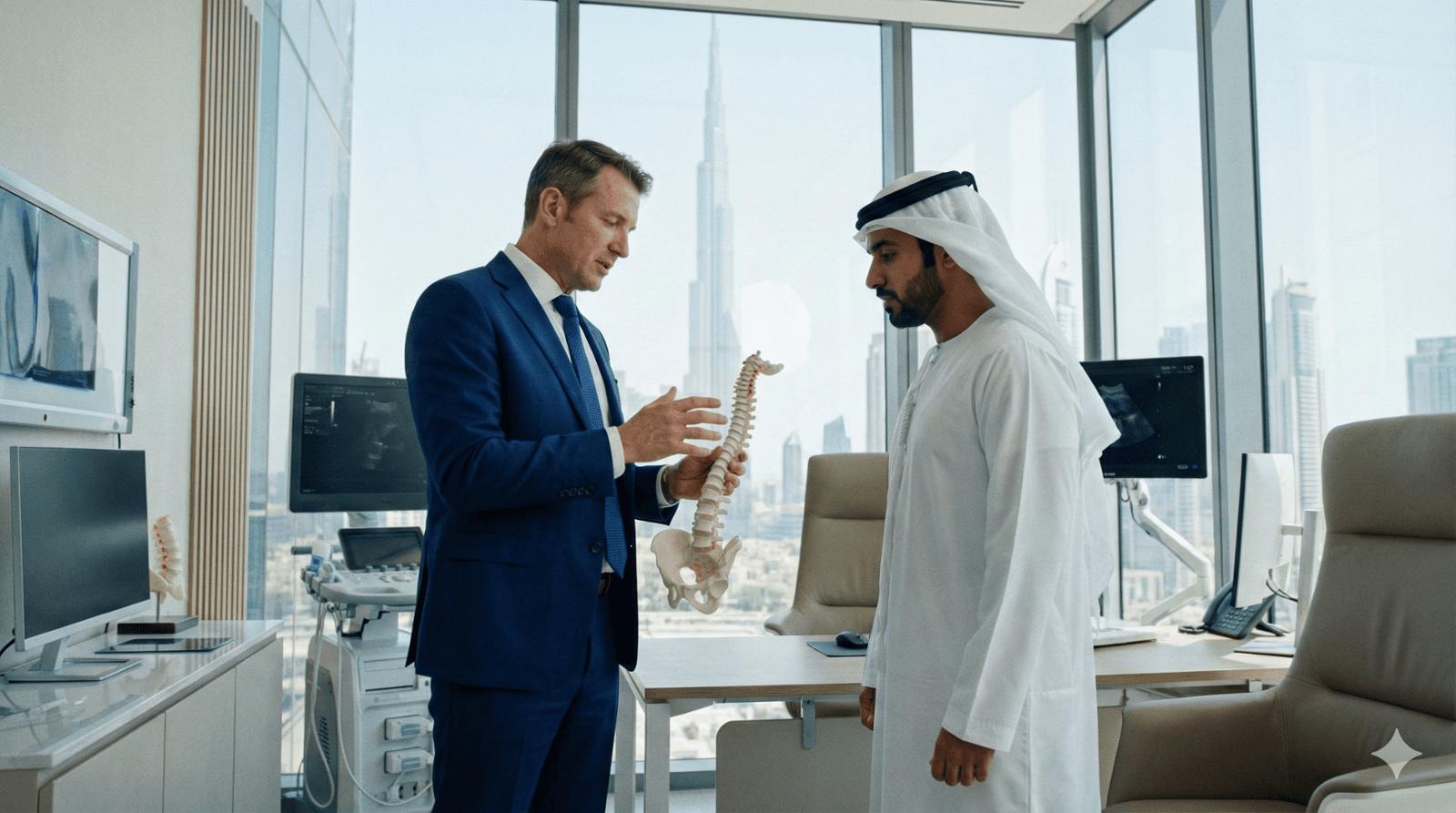
Moving beyond generalist recruitment to secure CCT-qualified leaders in high-margin surgical disciplines for Tier 1 facilities
A decade ago, the primary objective for medical recruitment in the Gulf was capacity building. New hospitals in Dubai, Abu Dhabi, and Riyadh needed to fill rosters quickly across general disciplines to meet the basic needs of a rapidly growing population. That era is effectively over.
Today, the Gulf's healthcare landscape is characterized by sophisticated competition and a drive toward specialization. The market has pivoted from seeking general competence to demanding hyper-specialized excellence. For Tier 1 institutions—whether JCI-accredited hospital groups or exclusive private day-surgery clinics—the focus has narrowed to acquiring elite surgical talent capable of performing high-complexity, high-margin procedures. In this new paradigm, the "Western-trained" credential—specifically UK CCT, US Board Certification, or equivalent—has become the non-negotiable baseline for surgical leadership.
The Economic and Reputational Drivers
The shift towards hyper-specialization is driven by hard economic realities and the pursuit of global prestige. Modern hospital economics in hubs like Dubai Healthcare City are reliant on high-yield service lines: complex orthopedics, neurosurgery, advanced oncology, and aesthetic plastic surgery.
To attract the discerning patient population that requires these procedures—including a significant volume of medical tourists—an institution must offer a "marquee" name. They need a surgeon whose pedigree guarantees outcomes comparable to the best centers in London or New York. Furthermore, rigorous accreditation bodies such as the Joint Commission International (JCI) increasingly demand evidence of specialized clinical governance and outcomes data that Western-trained surgeons are engineered to provide.
Defining the "Western-trained" Surgical Standard
When we speak of "Western-trained" in the context of surgery, we are referring to a specific, grueling pathway of professional development that is difficult to replicate.
A UK-trained Consultant Surgeon holding a Certificate of Completion of Training (CCT) has undergone a minimum of six to eight years of dedicated higher surgical training after medical school. Their competency is not just theoretical; it is proven through thousands of logged procedures performed under intense peer supervision within the National Health Service (NHS). Similarly, a US Board Certified surgeon has completed rigorous residency and fellowship programs defined by high volume and strict accountability.
This training imbues a surgeon not just with technical manual skills, but with surgical judgment—knowing when not to operate is often as critical as knowing how. This level of judgment is the ultimate risk mitigation tool for any Gulf hospital.
The Clinician's Perspective: Technology and Volume
Why do elite surgeons leave established practices in the West for the Gulf? The financial incentives are obvious, but they are rarely the sole motivator for the very best talent. The true draw is often professional acceleration.
The Gulf offers access to cutting-edge technology—such as the latest Da Vinci robotic surgical systems—often with fewer budgetary constraints than public systems in Europe. Furthermore, the unique demographics of the region can offer surgeons a higher volume of complex, specific case types, allowing them to build a super-specialized practice and research portfolio faster than they could in their home jurisdictions.
Conclusion
The market for general surgeons is saturated; the market for elite, CCT-qualified hyper-specialists is incredibly tight. Securing the services of a leading spinal surgeon or a world-class reconstructive plastic surgeon requires a sophisticated, targeted executive search strategy that goes far beyond standard recruitment advertising. It requires articulating a vision of a center of excellence that only they can lead.
Contact David for a confidential discussion on securing your next elite hire or role.