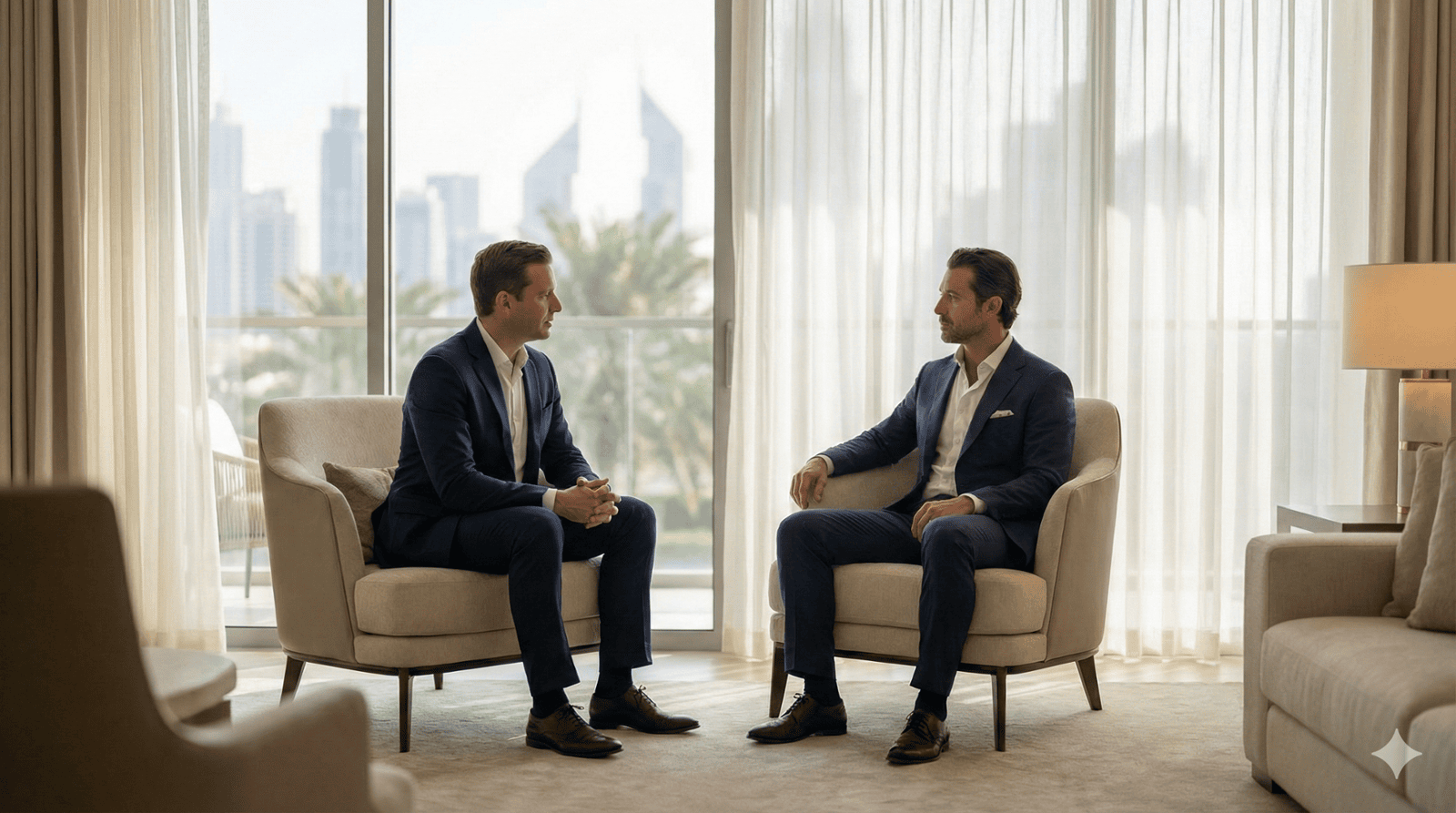
Why UHNW families and Royal Households are prioritizing in-residence, Western-trained clinical excellence over traditional hospital care
The landscape of luxury healthcare in the Gulf Cooperation Council (GCC) is undergoing a profound structural shift. While Tier 1 JCI-accredited hospitals in Dubai and Riyadh continue to expand, a more exclusive trend is emerging behind the closed doors of the region’s most affluent residences.
For Ultra-High-Net-Worth (UHNW) individuals, Royal Households, and Family Offices, the traditional VIP hospital wing is no longer the gold standard. The new benchmark is the Private Medical Concierge: a fully integrated, in-residence clinical team capable of delivering hospital-grade care with zero intrusion.
This shift represents a critical juncture for both elite employers and top-tier clinicians. It demands a level of sophistication that goes beyond medical competency, requiring a fusion of clinical autonomy, cultural intelligence, and absolute discretion.
The Strategic Shift to In-Residence Care
The motivation driving Family Offices in areas like Emirates Hills (Dubai) or the Diplomatic Quarter (Riyadh) is twofold: efficiency and privacy. For a Principal managing a global business empire, time lost in transit to a clinic is an unrecoverable asset. Furthermore, in an era of digital ubiquity, privacy is the ultimate luxury.
We are seeing a surge in mandates for "Medical Directors of Private Residence" and specialized "Private Nursing" teams. These roles are not merely about responsiveness; they are about proactive health management. The goal is to prevent the need for hospitalization entirely through rigorous preventative monitoring.
However, establishing a private medical infrastructure carries significant risk. Without the governance structure of a hospital, the burden of decision-making falls entirely on the individual clinician. This is why the caliber of the talent selected is not just important—it is the single point of failure or success.
The Non-Negotiable Standard: Western-trained Certification
When a Family Office recruits for a private role, there is no room for "learning on the job." The clinician must possess a level of training that ensures immediate, autonomous, and safe decision-making. This is why Western-trained talent is the exclusive currency of this market.
We specifically target professionals holding:
UK CCT (Certificate of Completion of Training) from the GMC.
US Board Certification.
Specialist Registration from the Medical Council of Ireland or equivalent EU bodies.
A Western-trained physician or nurse practitioner brings a foundation in Evidence-Based Medicine (EBM) that is critical for private care. In a private residence in Doha or Abu Dhabi, you do not have a department head down the hall to consult. You rely on your training. The rigorous residency programs of the UK and US foster the critical thinking required to distinguish between a minor ailment and a silent, acute presentation.
Discretion and Cultural Integration
Technical prowess is the baseline; cultural fit is the differentiator. A Western-trained clinician entering a Royal Household or a UHNW environment in the Gulf must operate as a "ghost." They must be present enough to ensure safety but invisible enough to never disrupt the family dynamic.
This requires a specific psychological profile. We screen for high emotional intelligence and the ability to navigate complex hierarchies without ego. Whether operating under the purview of the DHA (Dubai Health Authority) or the DOH (Department of Health – Abu Dhabi), the private clinician is also a confidant.
Confidentiality agreements are standard, but true discretion is a character trait. The ideal candidate understands that their role involves protecting the reputation and privacy of the family as zealously as they protect their health.
Navigating Regulatory Frameworks in Private Settings
A common misconception is that private medical concierge services operate outside the regulatory scope. This is false and dangerous. Whether in NEOM (Saudi Arabia) or West Bay (Qatar), clinical practice requires licensure.
For employers, hiring a "consultant" without the proper SCFHS (Saudi Commission for Health Specialties) or QCHP (Qatar Council for Healthcare Practitioners) licensure exposes the Family Office to immense legal liability.
We manage the entire licensing and DataFlow verification process to ensure that your private medical staff is fully compliant. By focusing on Western-trained candidates, we streamline this process, as these qualifications are recognized as Tier 1 by Gulf regulators, often allowing for expedited licensing pathways.
Conclusion: The Ultimate Insurance Policy
For the elite Employer, investing in Western-trained in-residence staff is not an expense; it is an insurance policy against clinical error and public exposure. For the Clinician, these roles offer a unique opportunity to practice pure medicine, unencumbered by high-volume hospital pressures, while securing a tax-free financial future.
The market for this level of talent is opaque and highly competitive. Securing the right professional requires a partner who understands the nuances of both Western clinical standards and Gulf cultural expectations.
Contact David for a confidential discussion on securing your next elite hire or role. Mention the link is just below.