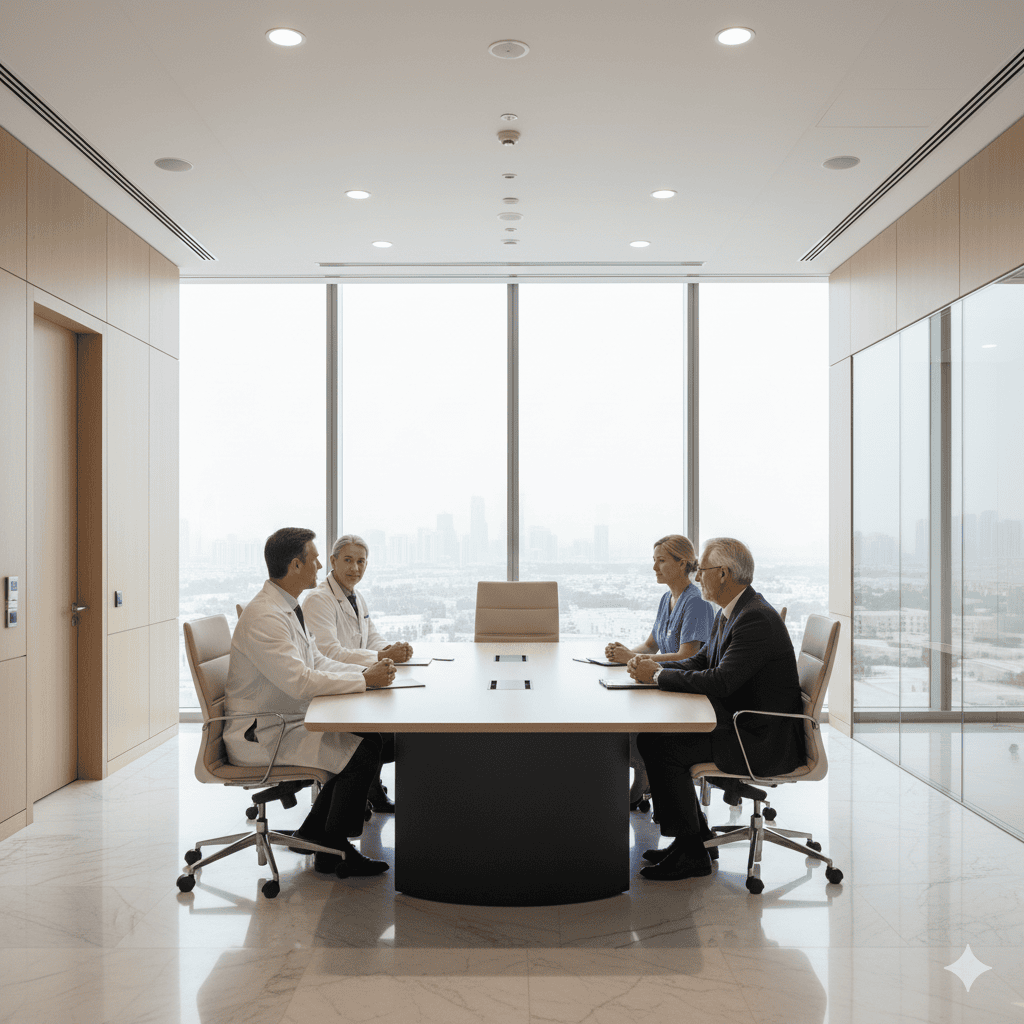
Turning high-pressure panels in Dubai, Abu Dhabi, Riyadh and Doha into calm, structured conversations
For many Western-trained doctors, nurses and physiotherapists, the most intimidating step in a Gulf move is not the licensing exam but the panel interview. Sitting in front of a medical director, nursing lead, HR and sometimes a hospital CEO in Dubai, Abu Dhabi, Riyadh or Doha can feel like an oral exam on your whole career. Handled well, it becomes your best chance to show that you are Gulf-ready and serious about team stability.
Gulf panel interviews are designed to answer three questions. First: can this Western-trained clinician be trusted clinically in our private hospital or private clinic? Second: will they fit our culture and patient expectations, including UHNWI patients and UHNW families? Third: are they likely to stay long enough for the investment in DHA, DOH, SCFHS or QCHP licensing and onboarding to make sense? Your preparation should speak directly to those concerns.
Clinically, you do not need to recite guidelines. You need to show how you think. Expect scenario questions: an unwell UHNWI patient arriving late to clinic; a deteriorating ward patient at night; a disagreement over a care plan. Use structured answers—what you saw, what you did, how you escalated, how you documented, and what you learned. Western-trained clinicians who can calmly explain decision-making under pressure stand out in Gulf private hospitals.
Culture fit is assessed more subtly. Panels listen for how you speak about nurses, physiotherapists, colleagues and previous organisations. If every story centres on conflict, blame or “fighting the system”, alarm bells ring. If you can describe how you contributed to culture, improved handover, supported incident learning or helped new colleagues settle, you paint yourself as someone who builds, not just critiques. That matters in teams serving demanding UHNWI and royal household pathways.
Gulf panels also probe your understanding of the region. They do not expect you to be an expert on Riyadh or Doha from day one, but they do expect realism. Be prepared to discuss why you chose the Gulf, how you see Dubai or Abu Dhabi fitting into your life, and what you know about working in a tax-free but high-expectation private sector. Honest, grounded answers are stronger than vague enthusiasm about “adventure” or “sunshine”.
Practical preparation makes a difference. Before the panel, review your own CV as if you were the medical director: any gaps, short contracts or abrupt moves will be questioned. Have clear, calm explanations ready. Think through 3–4 concrete examples that show clinical judgment, teamwork, escalation and patient communication. For nurses and physiotherapists, include at least one example of complex discharge or home-care coordination, which is highly valued in Gulf private hospitals and UHNW settings.
Online panel interviews are now standard for many roles. Even on video, treat it like you are walking into a boardroom: professional background, clear audio, stable connection and no interruptions. For Western-trained clinicians, this is often their first “window” into Gulf culture, and the panel’s first window into how they might appear to patients, families and senior colleagues. Calm, concise communication counts as much as content.
From the employer side, a good panel is a long-term retention tool. It allows Gulf private hospitals, private clinics and medical concierge teams to test not just knowledge, but alignment: does this Western-trained clinician understand governance, respect multidisciplinary work and have realistic expectations? When panels are rushed or disorganised, both sides miss warning signs—and turnover follows within the first year.
At Medical Staff Talent, we sit between these worlds every day. We specialise in recruiting Western-trained Doctors, Nurses and Physiotherapists into private hospitals, private clinics, medical concierge services, royal households and UHNW families across Dubai, Abu Dhabi, Riyadh and Doha. When we prepare clinicians for panels, we focus on structured answers, governance awareness, culture signals and a clear narrative about why the Gulf—and why this provider.
For Western-trained clinicians, the most useful mindset shift is this: a panel interview is not an interrogation; it is the first leadership meeting of your potential future team. If you can show that you are clinically sound, culturally aware and ready to help build a stable service, you are already doing what the best Gulf leaders do. At Medical Staff Talent, we do not just send you into panels with hope. We help you present yourself as part of the long-term core of a trusted Gulf medical team.